Category: Digital Marketing

  • How Local SEO Can Impact Your Brick and Mortar Business

    How Local SEO Can Impact Your Brick and Mortar Business

    SEO aka Search Engine Optimization is a term that in this day and age every local business owner should recognize. If you don’t know, or are scratching your head trying to figure it out the acronym. You need to read this article and, chances are that your website — You do have one, right? — is likely only found if someone types in your URL directly. SEO is the means by which a website is optimized for search and everyday there are literally millions of searches that are performed on Google.

    Here are a few quick statistics:

    • There are over 7.5 billion local searches each month
    • 87% of people who search for a certain type of business are searching for local results and call or visit the business within 24 hours
    • Implementing local SEO into your marketing plan is 15 to 20 times more cost effective than compared with traditional SEO in terms of return on investment (ROI).
    • Previously, local businesses relied primarily on foot traffic and traditional forms of advertising to compete at the local level. However, more and more people are using search engines to find the local businesses around them.
    • The creation of Map Pack based, local SEO has become necessary to put a business on the map (figuratively and on map applications users refer to on their mobile devices).

    Read our article on the Top SEO Tools for 2023

    Different Types of SEO

    Even if you already have SEO as a priority for your business, the new ranking factors that define local SEO differ from traditional SEO especially when it comes down to building links. Traditional SEO is having your business (brick and mortar or web based) show up organically in search results.  The search could be from a mobile device or from a desktop computer.  Traditional SEO has a variety of factors that are looked at, with back links being the most important.

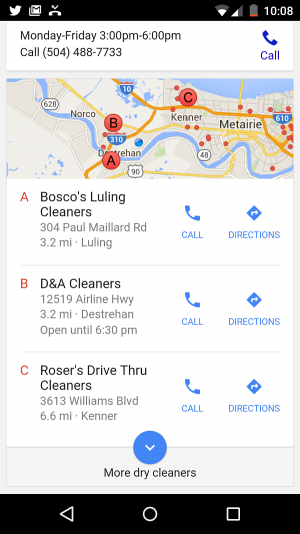
    Local SEO is quite different.  Local SEO is for bricks and mortar businesses only and uses the business location to show up in relevant search results.  Examples would be:  best hamburger near me, best Realtor website, printing company, personal injury attorney and so on.  You are anticipating seeing local businesses around you.  In many instances, the top 3 of these searches pull up in a map — which is called the 3 Pack or Map Pack.

    Traditional SEO and Local SEO have very different cost structures – because there are different ranking factors.  This article outlines the most important aspects of local SEO services that will optimize your business and most assuredly will increase foot traffic as well as online traffic to your establishment.

    Local SEO

    SEO local services can even help your bottom line if you don’t have a website by using your Google My Business page along with posting your listing in various directories on the Internet, such as Yelp , Brownbook , Yellowpages – and even the smaller, localized citation sites such as eBusinessPages.   These local “links” act as a hub for potential customers to find your business.

    Optimizing Your Google Business Profile

    Optimizing your Google Business Profile is crucial for a local, bricks and mortar business for several reasons. Firstly, it helps improve your online visibility in local search results. When people search for products or services in their vicinity, Google often displays a map pack featuring businesses with optimized profiles. By ensuring your profile is complete, accurate, and up-to-date, you increase your chances of appearing prominently in these results, making it easier for potential customers to find you.

    Secondly, an optimized profile provides essential information about your business to potential customers. This includes your address, phone number, website, business hours, and even photos. By providing accurate and detailed information, you make it convenient for people to contact and visit your business, enhancing their overall customer experience.

    Why you need SEO
    SEO is no longer only for the big, fortune 500 companies. Today, search engine optimization should be a portion of every businesses advertising budget..

    Thirdly, customer reviews and ratings play a significant role in shaping consumer perceptions. Google Business Profiles allow customers to leave reviews, and these reviews can greatly influence a potential customer’s decision-making process. By actively managing and responding to reviews, you can build trust, credibility, and a positive online reputation for your business.

    Moreover, an optimized Google Business Profile allows you to showcase your products or services, share updates, and promote special offers directly with your target audience. This helps in engaging and retaining existing customers, as well as attracting new ones.

    Lastly, Google Business Profiles provide valuable insights through Google My Business analytics. These insights offer information on customer behavior, popular search terms, and the effectiveness of your profile. This data allows you to make informed decisions and refine your marketing strategies.

    In summary, optimizing your Google Business Profile for Realtors or any local, bricks and mortar business is vital for improving online visibility, providing accurate information to potential customers, managing customer reviews, engaging with your audience, and gaining valuable insights. It ultimately helps drive foot traffic, increase customer satisfaction, and boost overall business success.
    LOCAL SEO
    LOCAL SEO

    The NAP Factor


    There are multiple factors that lend themselves to ranking your business in local searches however, the most important part of providing local SEO services comes down to three pieces of information known as NAP which stands for name, address, and phone number.

    While providing this basic information may seem like a no-brainer, a recent Constant Contact survey revealed that more than 50 percent of small businesses surveyed knew that there were inaccuracies in their NAP listings, however, 70 percent of the same businesses said they simply did not have enough time to spend on updating their listings across all directories.

    Example of Properly Set Up GMB NAP


    That is an amazing percentage, especially considering the fact that according to Moz, the number one negative ranking factor on Google is a false business address, and the third negative ranking factor is inaccuracy across directories in NAP information.

    Updating your company’s NAP information has become a critical piece to a business’s online ranking and it’s all comes down to consistency and accuracy in your online presence. Which can be a real challenge for humans because we all know that “to err is human.” In today’s world, a simple typo in your business name or the wrong address in a single directory can negatively affect your Google ranking.

    It’s not always convenient to stop everything else and take time to update what might seem small changes, but it can be critical when it comes to your customers finding you when they need to.

    Update your information:

    • If your business changes names (even slightly).
    • If you’ve moved to a new address.
    • If you’ve changed or added a new phone number or fax line.
    Local SEO MobileAccuracy is critical and keeping this information up to date on on the major internet directories can take some research, patience and time that many business owners just don’t have in today’s fast-paced world of commerce.

    Which brings the question: How does a local business owner make sure the NAP information for their business is accurate and consistent across all of these internet directories?

    While you can spend your time searching the internet to check each listing, making sure your information is accurate and consistent, many small business owners simply don’t have the time to take on the task. If that is the case then it may be time to find a reliable and professional SEO company. They will do the work for you and scour the internet to find and check each directory your business is listed on to make sure that your information is accurate and consistent.

    Information Beyond NAP

    Name, address, and phone numbers are just the tip of the iceberg when it comes to filling out local directories for your business. Potential customers want to see more information and the more information about your business that can be found in local directories is the more credibility it lends to your company in the eyes of local search engines. Beyond NAP you include as much information as you can including:

    • Hours of operation
    • Forms of payment
    • Prices
    • General Products and Services
    • Customer Reviews and testimonials
    • Link to Website and Social Media
    • Local Maps and Directions

    As a general rule, the more information you include in local directories about your business the better. Not only do customers like to see the most possible information, every piece of information gives your business a slight advantage in your local SEO efforts when compared to other local businesses in your geographical area. Google makes this process simple with its My Business page. This shows the business owner a completion bar which indicates how complete their page’s information is.

    Here are some tips to get your local SEO services information to 100%:

    Social Media

    Compared with traditional SEO algorithms, social media becomes much more important when it pertains to local SEO services. This is because many customers may never see your business website but will find you on whatever social media platforms they might be searching with i.e., Yelp, Facebook, YouTube, etc.

    Your first step in providing local SEO services is to claim your Google My Business page, then optimize all of the information on your social media pages to match the information on your My Business page as well as other local directories. This provides customers with all the information they need to find your business and optimizes your local SEO.

    Facebook “Likes” and “Retweets” on Twitter will count as a local search ranking factor. This basically means that you will rank higher on local search results the more people you have interacting with your business on social media.

    Encourage Customers to Review

    get reviews for local SEO
    get reviews for local SEO

    A huge local ranking factor is that of getting reviews from your customers and there are ways to incentiveize your customers to leave those all-important Facebook, Google+, Urbanspoon, Yelp, etc. reviews.

    It is no secret that Google favors businesses that are highly reviewed over ones that don’t have enough reviews or even worse have negative reviews. Good reviews from your customers can be the difference between showing up somewhere in the murky middle of local search results and reaching the highly sought after top spot.

    If your establishment is needing reviews, there are a variety of ways to encourage customers to leave a review after visiting. Something as simple as putting up a sign asking customers to leave a review could work. Incentives, such as a discount, coupon, or even a shout-out on social media could be enough to generate some reviewers. Assuming you have a great product or service these positive reviews can immediately bolster your local SEO efforts.

    Google’s New Hyperlocal Algorithm

    A newest development in the local SEO is Google’s hyperlocal “neighborhood algorithm.” While sometimes it may be hard to group businesses into neighborhoods because of unclear boundaries, Google is trying to make local searches more accurate for the people trying to find businesses in their area.

    It’s never too early for businesses to jump on this bandwagon and include neighborhood data in their listings. By including specific neighborhood terminology, a business can be ahead of the curve when Google integrates neighborhood data into local SEO and optimizes their existing local SEO efforts at the same time.

    Some ways to take advantage of this new hyper-local search are:

    • Include neighborhood information in your Google My Business page
    • Add your neighborhood to your website and social media page text
    • Add your neighborhood to title tags on your website.
    • Make sure Google Maps has your neighborhood mapped correctly.

    While hyperlocal SEO is still being embraced and understood by businesses, it’s important to continue to stay ahead of competing local businesses as it becomes more and more significant for consumers.
  • How Realtors Use Social Media to Sell Your Home

    How Realtors Use Social Media to Sell Your Home

    Using Social Media to Sell Your Home

    Social media has shrunk our world to the point that now you can reach a targeted global audience with the click of a mouse. Social media is especially valuable in the real estate industry, allowing realtors to instantly connect with targeted buyers and sell your home faster than ever before.

    Here are a few of the social media tools your realtor will use to sell your home.

    Create a Unique Facebook Page

    Facebook is tops when it comes to social media, and local Realtors have discovered how to promote their listings using Facebook pages. In these technological times, the most successful Realtors know that to compete they must use the internet for leads and will have their own personal page and business page. Now, with Facebook, they can create a single page dedicated specifically to your home listing. The listing can host high-quality pictures and videos of your property, details about the house, as well as pricing, measurements, and contact information for interested buyers.

    The unique page promoting your house will be shared with a targeted audience of prospective buyers who have shown an interest in buying a home. Your Realtor will use the page to promote your home on other Facebook pages as well as other social media accounts. When potential buyers comment or have questions, you and your realtor can monitor the page and reply instantly to their concerns.

    Local Pinterest Realty Groups

    Pinterest is a social media site where you can post high-quality images of just about anything. Real estate agents have discovered they can use Pinterest to get leads and drive traffic to the Facebook page promoting your house for sale. They simply create local boards and build a community of followers that help to grow the popularity of the boards, exposing it to more potential buyers.

    pinterest

    One of the biggest benefits of using Pinterest is that your realtor is going to encourage other realtors or sellers to collaborate on the board, helping explode the views and get a larger audience to the posts. Building a digital community of potential buyers, means that each time you post a new picture of the house, it is instantly seen by Pinterest users!

    The Power of Facebook Ads

    When selling your home, you want to be able to get your listing in front of the right buyers as quickly as possible. Unlike advertising in the newspapers or real estate magazines, Facebook ads work the opposite way. Rather than your realtor spending time and money hoping the right buyer sees their ad in the local newspaper, the Facebook ad only appears on the pages of Facebook users who express interest in the local real estate. If the user searches for a home in your town on Facebook or Google, then your Facebook ad will appear prominently in front of the user.

    Now if these users are aggressively looking for a house, they will be lead right to the Realtor’s website or Facebook page promoting the property. From there, these potential buyers can request a showing or follow the links for more details about the property with a few clicks of the mouse.

    Video Tours on YouTube

    Perhaps the biggest advantage for your Realtor to using social media when trying to sell your home is the ability to create videos that give potential buyers a chance to tour the house from the comforts of their home. YouTube is the number one social media site for videos, and millions visit the site daily, including those promoting real estate listings. Your Realtor can craft a stunning virtual tour of your property, and promote it to people searching for real estate in the area. The biggest advantage to using YouTube videos in real estate marketing is that your realtor can link to the video on their Facebook page, in e-mails, on Twitter, and even LinkedIn.

    youtube for realtors

    This social media platform also provides your Realtor another benefit, after the video has 100 unique views, it gets picked up by Google Search for real estate and now your listing is exposed to a global audience. Real estate agents can include a powerful call to action links under the video to help create a list of contacts and to schedule showings.

    Twitter Real Estate Hashtags

    Most Realtors have discovered that if they have clients buying a home or selling a house, they can get maximum exposure by utilizing Twitter to reach potential buyers. Your realtor knows that when it comes to selling your home, local leads are a premium. By using the Twitter hashtags, they can get more eyes on their listings instantly.

    By using the right realty hashtags, your listing agent can get all the traffic from the top search terms to see their listing hour after hour. Realtors have discovered that they can reach a larger targeted audience for far less money and in less time by simply using Twitter hashtags.

    The more social sites your Realtor is utilizing, the more potential buyers will have instant access to all the details concerning your listed property. With leads coming in from multiple social media platforms at the same time, all your realtor will have to do is schedule the showings and continue to drive more traffic to the videos and pages promoting your home to get you the best offer.

  • Why You Need A Website

    Why You Need A Website

    For most businesses, a web site is one of the most important investments you can make. Entrepreneurs are either overspending or underspending on their web sites, and many have no idea what they’re doing or why.

    1. Your web site reflects you as a business owner and professional.
    If your web site looks professional, your potential clients will think you’re a professional who has enough clients and enough income to have a site built for you. If potential clients visit your web site and it looks half-assed and home-built that’s how they’ll perceive you.

    If you’re a web developer, by all means, build your own site, as that will reflect your capabilities. Everyone else, hire a solid company that can do a good job, not just in building your web site, but in getting it seen and in building it wisely to maximize the traffic you’ll get.

    2. Your web site can mean extra local business.
    Even if you’re primarily brick and mortar, having a solid web site can mean extra business. Local clientele often perform searches online and find your web site, encouraging them to walk into your store. If they find your competitors and they look more reputable or solid than you (or if they have a web site and you don’t), you’ll lose business, just because of your web site. And, when you’re mentioned in the media or on review sites like Yelp or Angie’s List, you’ll need a web site to help people find you.

    3. Your web site can mean global business.
    Did you ever think about getting orders from Australia or Malaysia? Launching a fantastic web site means you’ll instantly become a global business, allowing you to expand your clientele to a much larger audience. Your web site is visible in almost every country around the globe, and that means you expand your potential client base by millions. You’ll still want to keep your target market in mind, but an international audience may still find you appealing.

    4. Your web site can generate media interest.
    If a journalist is looking for an expert in your field to quote for an article, s/he is more likely to choose the business owner whose web site looks professional and clean than someone who looks like they don’t really know what they’re doing. And as most of you know, a mention in the media can be powerful for your business!

    Don’t do your business a disservice by putting up a shoddy web site. Take care and invest wisely in your business web site by hiring someone who knows what they’re doing.


    More Website Information

    Here is a bit more information and statistics about websites and the importance they hold for a business in the present day.

    With over 2.2 billion people online, the internet has revolutionized how we find and share information. The online world is moving at a rapid pace and doesn’t show any signs of slowing. For businesses, a web presence has become a fundamental part of success. But why is a presence on the web so important? How significant is the impact of being online? We’re glad you asked.
    After several years with Fidelity Investments, in 1996 Richard Sexton decided to step away from the corporate world and follow his passion by opening Himal Home Gallery, a local home furnishings store in his hometown of North Carolina.

    “I didn’t have any experience in running a retail operation. [The] learning curve had its fair share of mistakes,” Sexton said. “Going online early and choosing to use Google products were some of the better moves.”

    During the ‘90s, no one knew for certain if there was a place for small businesses online or if they could find success there. But Sexton took the chance and launched a website for Himal Home Gallery. The online presence gave Sexton’s small business a great deal of attention and the small shop took off. In 2000, Sexton relaunched the furniture store as Carolina Rustica, focusing primarily on wrought-iron furniture, their best selling item.

    “We started with a small 500 square-foot booth in an antique mall and now our gallery is almost 20,000 square feet,” Sexton said. “Through the web, we could reach a much larger audience, and we began to invest in marketing activities that could connect us with us potential customers. I am very happy with the results. Our sales have increased 50% year on year.”

    Carolina Rustica is just one of the many small businesses that found great success establishing an online presence. But can their model apply to other business types? Can business that don’t sell products online still find a success with a website? Is having a business website really that important?

    Yes, absolutely.

    Having your website found.

    You may have the most beautiful and elaborate website on earth, but if no one can find it on the vast internet, it may not as well exist.  The art of having your website pull up, for the search terms your clients are using, is called SEO or Search Engine Optimization.  Different business verticals have different challenges for SEO.  For instance, we have a deep history in real estate search engine optimization, which has always been one of the most challenging verticals for SEO.  If we can rank a local real estate broker on page one of Google, going up against monsters in in the industry such as Zillow, Realtor.com and Trulia, we can get your website in front of your customers too.

    Never before has the world been able to connect across the globe and interact so easily. Think about the last time you needed to know something, anything — chances are you went to look it up online. The Internet has completely changed the way we live and how we gather information. Not only is it now our primary source of information, but it has revolutionized the way businesses operate and communicate with customers.

    Websites and the online tools that promote them should be the focal point of all advertising and marketing for all businesses, big or small. Here’s why:

    Because people are online. If you’re looking for an audience, more customers, or people to influence, the web is where your business needs to be. With over 78% of adult Americans using the Internet and an astounding 2.2 billion people online worldwide, it’s no surprise that small businesses with websites experience an average of 39% greater revenue per year than those without websites, according to the Small Business Administration.

    But what if my consumers aren’t online? We get asked this question all the time. For example, sometimes our clients refer to their consumers from an older demographic. We always tell them that they would be surprised at the amount of adults over 50 using the Internet.

    When Roy Williams (business guru and New York Times bestselling author of “Secret Formulas of the Wizard of Ads”) was giving the keynote at a trades conference in Las Vegas, the chairman of the organization asked him to avoid mentioning the Internet because nearly all their 1,600 members were over the age of 55. Surprised by his request, Williams decided to start the talk by asking the crowd, “How many of you have used a search engine within the past seven days to research a product or service you were considering purchasing?” Almost instantly, over 95 percent of the members raised their hands.

    A personal example: My gramps is an old-fashioned man who frankly didn’t care for computers until after he retired in 2002. But now at 70, he can’t get enough of his iPad or sharing vacation pictures with his friends on Facebook. (Yes, that’s right, my gramps is on Facebook with his friends). When I asked him why he changed his mind about the Internet, he simply said, “It’s convenient. That’s where everybody and everything is. It’s the fastest way to do or find or share anything.”

    Your consumers are online, trust us.

    Because it establishes credibility. When consumers can’t find a company online it raises a red flag. Does this company really exist? Can I trust them? Are they trying to scam me? People are more skeptical than ever. Even when consumers don’t purchase online, they research and look online before they buy. In fact, 58 percent of global online consumers said they more likely to trust a company with “owned media,” such as a company with a website, versus one who doesn’t (Nielsen Advertising Survey, 2012).

    When you have a good website, it gives people a peace of mind about your business. Whether you’re selling a product or service, or simply providing information, it’s important for your business to have a web presence in order to establish credibility.

    Because it’s a great way to build your brand. A website lets you brand your business like never before. Websites give you unlimited freedom to determine how your business looks to your customers. Websites are flexible and can grow as yours business evolves, and they also allow your business to be available around the clock, even during off business hours. Add to this that websites are one of the most cost-effective tools available and it’s obvious why so many businesses now leverage a website.

    Business branding through the web will help you develop a stronger reputation to millions around the world. Potential customers will be able to research your business and find good reviews about the product or service you provide. In fact, consumers say they trust online consumer reviews second from personal recommendations (Nielsen Advertising Survey, 2012). Think of your website as an extension of your sales staff, helping you nurture and generate leads by educating people on your products or services.

    Because it is the best way to engage with prospective customers. Word of mouth has and always will be the most trusted form of advertisement. 92 percent of consumers around the world say they trust earned media, such as word-of-mouth and recommendations from friends and family, above all other forms of advertising (Nielsen Advertising Survey 2012).

    With a website, you make it easy for consumers to share your business. With a simple link, they can instantly access all your business information. And with social media platforms such as Twitter and Facebook, it’s now even easier for people the to share things they love or recommend. When you have a website, you give these recommendations a place to go. Websites serves as central place for potential customers to learn more about why your business is so great.

    We’re here to help you be successful. A website is the foundation for a web presence, which is the first step to making your business successful. The task may seem a bit daunting, but we’re here to help guide you through the entire process. Levitate Web Design wants you to be successful, so we work hard to give you all the tools you need.


    Originally Posted by Levitate Web Design